Why your lived experience is the most important credential you’ll ever need
What if the very thing that broke your heart is the credential you’ve been waiting for?
We’ve been sold a lie: that the only people qualified to lead change are the ones with degrees, titles, or institutional power. But most movements don’t start in think tanks or boardrooms. They start in kitchens, classrooms, and coffee shops — with ordinary people refusing to accept the status quo.
This episode of Find Your Freaks is about dismantling the “I’m just a…” myth. I’m just a mom. I’m just a student. I’m just a private citizen. Those words silence the very people most qualified to speak. The greatest experts are the ones living the problem day in and day out.
If you’ve lived it, you’re ready. Not to do it all forever, not to carry the mantle alone, but to take the next right step that makes your people safer.
[06:01] Nikki James Zellner’s daycare story: how one mom sparked a state law
[12:31] Why lived experience is the real qualification for advocacy
[17:41] What communities actually ask for when you listen
[23:01] The cost of advocacy (and how to set boundaries)
[27:02] The permission slip: if you’ve lived it, you’re ready
The “I’m Just a…” Myth
“I’m just a mom. What can I do?”
“I’m just a student. What difference can I make?”
We hear this all the time. Maybe you’ve even said it yourself. But every time we say “just,” we shrink the power of lived experience. We convince ourselves that the people closest to the problem are somehow the least qualified to solve it.
The opposite is true. Outsiders may bring perspective, but insiders bring context. They see the nuance, the daily reality, the things statistics can’t capture. That’s why the first voices that need to be heard are the ones already living inside the issue.
A Mom, a Furnace, and a Law
In Episode 6, Nikki James Zellner shared how she became an advocate for carbon monoxide safety in daycare centers. She didn’t wake up one morning craving policy reform. She dropped her children at daycare, like any other mom. And then a malfunctioning furnace exposed kids to carbon monoxide without a single detector in the building.
She could have stopped there. Bought her own detectors. Protected her kids privately. But instead, she asked questions: Why isn’t there a law? How did this happen? Who else is at risk?
Those questions grew into a movement. Today, thanks to Nikki’s persistence, kids across her state are safer.
That’s how change happens. Not because an “expert” steps in, but because someone living the problem refuses to stay silent.
Listening to the People Who Live There
I once worked on a research project aimed at improving rural life. The experts had all kinds of ideas: maybe a grocery store, maybe a hospital, maybe better schools. But when they finally sat down with residents, the top request wasn’t healthcare or education.
It was sidewalks.
Without sidewalks, parents couldn’t safely walk their kids to school. What good was a new grocery store if they couldn’t cross the street without fear? The simplest, cheapest solution turned out to be the one no outsider had imagined.
The people living the problem always see it most clearly.
The Cost of Carrying the Mantle
Advocacy isn’t free. It takes time, energy, and sometimes the uncomfortable role of “that mom” or “that neighbor” who won’t stop asking hard questions.
But carrying the mantle doesn’t mean carrying it forever. Nikki’s work continues today not because she does it all herself, but because others picked up the torch.
Your job isn’t to be the hero of every story. It’s to take the next right step — and trust that others will join you.
Here it is, in writing: If you’ve lived it, you’re ready.
Ready to write the letter.
Ready to start the group.
Ready to speak up at the meeting.
Not to run the whole movement, but to mobilize yourself — and maybe a few others — toward safety, dignity, and belonging.
Because nobody is “just” anything when they’re called to defend their community.
Meet Your Host
Tonya Kubo is a community strategist, marketing consultant, and rebel with a cause: helping people find the place where they truly belong. For nearly two decades, she’s built online spaces that feel less like comment sections and more like chosen family. She’s the fixer you call when your Facebook group has gone straight-up Lord of the Flies and the bouncer at the door of internet nonsense. As the host of Find Your Freaks, Tonya brings together unconventional thinkers and bridge-builders who know “normal” was never the point. Her favorite spaces? The ones where the freak flags fly high.
If Find Your Freaks matters to you, help us keep it ad-free by buying us a coffee (or two!). Every dollar goes to production so more weirdos can find their people.
Next time on Find Your Freaks: We’ll talk about parenting off script. Stay tuned for Episode 8’s exploration of finding belonging when your life doesn’t align with what others consider normal.
How one mom turned a daycare emergency into a movement for change
Sometimes life reroutes us in an instant. For Nikki James Zellner, that moment came on an ordinary daycare drop-off day in February 2020. By nightfall, she wasn’t just a working mom anymore. She was a mother whose children had narrowly survived carbon monoxide poisoning.
What followed was the kind of pivot nobody plans for. Nikki discovered a loophole in state safety codes, one that didn’t account for daycares or schools to be equipped with carbon monoxide detectors. Instead of filing a lawsuit, she decided to speak up. That choice transformed her into a watchdog for systemic change — and eventually the author of a framework that helps everyday people see themselves as changemakers, too.
This conversation is about carbon monoxide, yes. But it’s also about lived experience, the courage to be “that mom,” and the difference between visibility and impact. If you’ve ever wondered whether your voice matters, Nikki’s story is proof: what you’ve lived is enough to lead.
Episode Highlights
[03:39] The daycare carbon monoxide leak that changed everything
[07:38] From one phone call to a statewide (and national) problem
[16:05] Lap dogs, guard dogs, attack dogs, and watchdogs explained
[24:42] “If you’ve lived it, you’re qualified to lead it”
[29:31] Visibility vs. impact at the community level
[38:50] Fighting burnout and redefining wins
[44:45] Output vs. outcome: measuring what you can control
Lived Experience as Leadership
What would you do if your children came home poisoned from daycare—and the state law made it perfectly legal? For Nikki, the answer wasn’t obvious at first. She admits there were days she stayed in “blame mode,” replaying whose fault it might be. But her journalism background pushed her toward questions instead of anger.
What she found shocked her: a building code loophole that had likely endangered kids for decades. The discovery sparked a new identity. Nikki’s value system shifted, and so did her sense of responsibility.
Not every activist wears the same collar. Nikki outlines four types of community responders:
Lap dogs: passive until told otherwise
Guard dogs: loud online, but inactive offline
Attack dogs: angry, reactive, and often ineffective
Watchdogs: persistent, informed, and solutions-oriented
It’s not that one group is all bad or all good—most of us cycle through them. But Nikki makes a compelling case for why watchdogs, not attack dogs, create lasting change.
While other parents sued their schools, Nikki deliberately chose not to. Lawsuits, she explains, can silence families through nondisclosure agreements. She wanted her story public, not buried.
Instead, she created resources any parent could use: audit checklists for schools, template letters for lawmakers, and even a Watchdog Way quiz that helps people see their advocacy style. These tools have rippled far beyond her own state—used in places like Michigan, Louisiana, and Wisconsin.
Big systemic wins are rare. Nikki cautions against measuring success only in sweeping legislative changes. Instead, she urges would-be watchdogs to track their output, not their outcome.
For her, that looked like visiting one daycare a week in Alabama to hand out resources and have conversations. One hour, every week. By year’s end, 52 schools had new knowledge, resources, and alarms.
It wasn’t glamorous — but it was impact.
Freak Flags Fly
Before we let Nikki go, we played a round of Freak Flags Fly. Here is how she responded:
You’re my kind of freak if… you nerd out on things you care about.
Something you love that your friends don’t get: serial killer documentaries.
Community you’d infiltrate just to understand better: MAGA.
Tool or ritual that keeps you connected: monitoring CO incidents and engaging journalists on Twitter/X. Someone doing freakishly good work who deserves a bigger stage: Dr. Amanda Crowell, author of Great Work and host of The Great Work Podcast.
Meet Our Guest
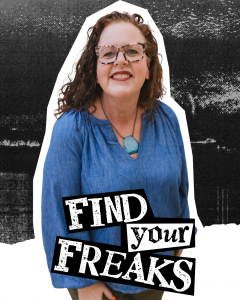
Nikki James Zellner is a brand advisor, creative strategist, and citizen advocate who turned a near-tragedy at her children’s daycare into a movement for carbon monoxide safety. She’s the founder of The Watchdog Way and the forthcoming book of the same name (early 2026), which helps everyday people take small steps to create big change in their communities.
Meet Your Host
Tonya Kubo is a community strategist, marketing consultant, and rebel with a cause: helping people find the place where they truly belong. For nearly two decades, she’s built online spaces that feel less like comment sections and more like chosen family. She’s the fixer you call when your Facebook group has gone straight-up Lord of the Flies and the bouncer at the door of internet nonsense. As the host of Find Your Freaks, Tonya brings together unconventional thinkers and bridge-builders who know “normal” was never the point. Her favorite spaces? The ones where the freak flags fly high.
If Find Your Freaks matters to you, help us keep it ad-free by buying us a coffee (or two!). Every dollar goes to production so more weirdos can find their people.
Nikki reminded us that lived experience is a powerful credential, if we’re willing to act on it. But it also leaves us asking: whose experiences count, and which voices do we listen to when the story isn’t easy? In Episode 7, we explore advocacy from another angle—and why the most powerful leaders are often the ones who never planned to lead.
What makes one person’s suffering worthy of compassion while another’s is dismissed as deserved? That question has haunted me since I was a kid in the 1980s, pointing out hypocrisies adults told me to ignore. Pro-life but pro-death penalty. Mourn an abortion but dismiss an execution. Even then, I knew something didn’t line up.
This solo episode of Find Your Freaks goes straight to the core of belonging: every human has the right to be seen and valued. But when we decide some people’s suffering doesn’t matter, we shrink our own humanity in the process.
Episode Highlights
[03:09] The haunting question that keeps Tonya up at night
[08:05] Us vs. them: How we assign compassion
[14:25] Why belonging must include criminals
[20:10] How society teaches us whose lives are “grievable”
[24:27] Propaganda, dehumanization, and historical echoes
[37:16] Serving in your lane: belonging through gifts and talents
[40:23] A reminder if you’ve been told your pain doesn’t matter
From childhood, I noticed contradictions in how adults talked about life and death. Some losses were treated as tragedies. Others were brushed aside. These contradictions sharpened into a lifelong question: Whose suffering counts, and why?
We all sort people into categories, sometimes unconsciously. There’s us: the people who look like me, think like me, believe like me, live like me. And then there’s them.
For us, mistakes get softened:
“She meant well.”
“He just had a lapse in judgment.”
“They were trying their best.”
For them, even good actions are tainted, and bad ones are proof of their character:
“They should’ve known better.”
“They got what was coming.”
This is how society decides who deserves compassion, whose deaths merit headlines, and whose stories never get told.
Secrets and Silence
Secrecy thrives in this system. If your loved one is incarcerated, if you’re living with addiction, if you’re drowning in clutter or grief — you’re pressured to hide it. Because the moment people see you as part of them, you risk exile.
That’s why recovery communities are so powerful. They break the silence. They create a space where you can name your struggle without watching people flinch or walk away. Belonging begins where secrecy ends.
Dehumanization Then and Now
Categorization is one thing. Dehumanization is another.
History shows us how propaganda strips people of humanity so their suffering feels less urgent. In World War II, Japanese-Americans, including my husband’s grandparents, were portrayed as vermin before being forced into internment camps. When you convince people that their neighbors are rats, suddenly forcing them into horse stalls at a county fairgrounds doesn’t look like abuse. It looks like pest control.
And we still see the same logic today:
The incarcerated — “They broke the law. They get what they deserve.”
The unhoused — “They could work if they wanted to.”
When George Floyd was killed by police in 2020, some people were horrified. Some were furious that others were just now waking up, and still others rushed to justify his death. The same video produced outrage, indifference, or blame depending on how someone had already categorized him in their minds.
As Judith Butler writes in Frames of War, society hands us “frames of grievability”: cues that tell us which lives matter enough to mourn and which don’t even count as losses.
Expanding the Circle
Rachel Allen’s Beyond Broken podcast lifts the veil on what happens behind bars — rotten food, denied medical care, the cruelty of paperwork delays that cost lives. She forces us to ask: What crime could ever justify this kind of treatment?
Her work reminds me that belonging doesn’t always require building a group. Sometimes it’s as simple as shining a light where others prefer darkness.
So I’ll ask you the same questions I ask myself: Who are you called to re-humanize? Whose pain are you being invited to witness? And can you extend that compassion even to those you disagree with, or don’t want to live next to?
Because when we expand the circle of grief, we reclaim our own humanity, too.
Meet Your Host
Tonya Kubo is a community strategist, marketing consultant, and rebel with a cause: helping people find the place where they truly belong. For nearly two decades, she’s built online spaces that feel less like comment sections and more like chosen family. She’s the fixer you call when your Facebook group has gone straight-up Lord of the Flies and the bouncer at the door of internet nonsense. As the host of Find Your Freaks, Tonya brings together unconventional thinkers and bridge-builders who know “normal” was never the point. Her favorite spaces? The ones where the freak flags fly high.
If Find Your Freaks matters to you, help us keep it ad-free by buying us a coffee (or two!). Every dollar goes to production so more weirdos can find their people.
Next, we’ll talk about how finding your people doesn’t always mean starting a group. It can also mean using your unique gifts on behalf of others. Stay tuned for Episode 6.
What we owe the incarcerated — and the communities holding on outside
What if the punishment wasn’t the prison sentence itself, but the isolation that follows? In this episode of Find Your Freaks, writer and podcaster Rachel Allen joins me to pull back the curtain on life behind bars — not only for those incarcerated, but also for the families left standing in fluorescent visitation rooms.
Rachel shares how she lost nearly everyone in her life when her husband was incarcerated, the hidden community that forms in waiting rooms, and the burden of secrets she carried until she found safe places to speak them. Together, we tackle the uncomfortable truth: our prison system isn’t just broken, it’s designed to dehumanize. And yet, in the darkest corners, belonging still finds a way.
Episode Highlights
[03:23] Growing up “othered” and the soft spot it created for outsiders
[07:08] The fear of revealing her husband’s incarceration — and losing everyone
[12:19] Creating Beyond Broken and exposing systemic abuse
[17:38] Why visitation is anything but “pleasant”
[20:21] Finding fragile community in visitation waiting rooms
[26:10] But don’t criminals get what they deserve?
When her husband entered the federal prison system, Rachel’s life imploded. Nearly everyone she knew disappeared overnight, leaving her shattered and alone. Out of that devastation, she built new forms of belonging — both in the fragile, fluorescent-lit visitation community and in her work giving voice to those society would rather erase.
Prison doesn’t just punish the incarcerated; it punishes their families. Rachel exposes the endless advocacy work, bureaucratic battles, and humiliating visitation processes that spouses (usually wives) endure just to stay connected.
She paints a vivid picture of waiting in line for hours, filling out endless forms, being herded through inconsistent rules, and then finally sitting across from her husband under fluorescent lights, three feet apart in hard plastic chairs. “All of our dates, our marriage, our entire relationship,” she says, “takes place from three feet apart in those chairs.”
Survival demands community — even in places designed to keep people apart.
Grace, Humor, and Humanity
Despite the heaviness, Rachel insists on humor and grace as survival tools. “It’s a load-bearing structure,” she says. “If you try to make a life in the breakdowns, that just makes a bad situation so much worse. So you find something dumb to laugh about, because otherwise, what’s the point?”
From the woman unknowingly carrying a clear purse emblazoned with “Sooie, Run, Pig,” to Rachel’s deep compassion for those society calls “undeserving,” she reminds us that belonging is about humanity, not perfection.
When asked how she responds to people who say, “They got what they deserved,” Rachel doesn’t flinch:
“It’s not like, oh, this is moderately uncomfortable. It’s not like it kind of sucks. It’s like people are actively dying in horrific and absolutely preventable ways.”
She reminds us that even states with the death penalty have rules to prevent undue suffering — yet inside prisons, people die from heatstroke, neglect, and violence at the hands of guards. If dignity matters at all, it must matter for everyone.
Every interview ends with a rapid-fire round where our guests wave their freak flags proudly. Here’s how Rachel answered:
You’re my kind of freak if… “…you can’t understand how anybody could look at people like you and not think you’re cool.”
What’s something you love that your friends just don’t get? “I’m really fascinated by WWI — the psychology of it fascinates me endlessly.”
What community would you infiltrate just to understand it better? “Ultra-high-net-worth people. I love just watching how they move through the world. It’s incredibly strange and fascinating.”
What tool, ritual, or practice helps you stay connected to your people? “Writing. Whether it’s essays, poems, or memoir, that’s the way I really share my heart.”
Who’s someone doing freakishly good work who deserves a bigger stage? “Heather Pirtle with the First Network. She’s brilliant, and what she’s doing is incredibly powerful and effective.”
Meet Our Guest
Rachel Allen is an Appalachian-born writer and host of Beyond Broken, a podcast that dares to look straight into the brokenness of the U.S. prison system and imagine something better. A journalist-turned-marketer-turned-memoirist, Rachel has written for global brands, tiny nonprofits, and everyone in between. Her essays and upcoming memoir, Batshit, dig deep into the uncomfortable, beautiful truth of what it means to be human and still fight like hell to belong.
Meet Your Host
Tonya Kubo is a community strategist, marketing consultant, and rebel with a cause: helping people find the place where they truly belong. For nearly two decades, she’s built online spaces that feel less like comment sections and more like chosen family. She’s the fixer you call when your Facebook group has gone straight-up Lord of the Flies and the bouncer at the door of internet nonsense. As the host of Find Your Freaks, Tonya brings together unconventional thinkers and bridge-builders who know “normal” was never the point. Her favorite spaces? The ones where the freak flags fly high.
If Find Your Freaks matters to you, help us keep it ad-free by buying us a coffee (or two!). Every dollar goes to production so more weirdos can find their people.
Rachel’s interview left me wondering about whose suffering matters, and which lives we consider worthy of grieving. Episode 5 explores the idea of dehumanization further and how it affects beliefs about those who look, believe, live and choose differently from ourselves.
Most people who join Clutter Free Academy don’t start with a cheerful hello. They come in calling themselves lazy, terrible, a bad wife, a bad mom. They expect judgment, maybe even rejection.
In this episode of Find Your Freaks, host Tonya Kubo reflects on her conversation with Kathi Lipp (Ep 2) and digs deeper into how kindness — not shame — became the foundation of one of the kindest corners of the internet.
Clutter may look like a housekeeping issue, but it’s really about overwhelm, perfectionism, and shame. What people need isn’t another chore chart. What they need is belonging. And belonging, Tonya argues, always has to come before belief.
Episode Highlights
[03:51] Kathi’s trust: building on free rein
[07:20] Guardrails that made Clutter Free safe
[09:21] Tonya’s story of clutter, hoarding, and healing
[12:29] Insisting on kindness—even toward yourself
[17:55] Universalizing struggles to normalize experience
[20:15] Aggressive kindness in practice
[25:40] Why exclusion is part of belonging
[27:37] Belonging before belief
Clutter Isn’t About Stuff
From the outside, clutter looks like a pile of mail or an sink full of unwashed dishes. But as Tonya reminds us, clutter is rarely just about stuff. It’s perfectionism in disguise, overwhelm turned tangible, shame stacked in a pile.
Trying to “fix” clutter with more rules only deepens the spiral. The real transformation begins when people can name what’s really underneath, and still be welcomed exactly as they are.
When Clutter Free Academy first launched in 2016, Tonya knew safety had to come first. That meant setting clear guardrails. The group wasn’t open to “born organized” critics who saw cluttery people as experiments. This wasn’t a place for shame. It was a place for solidarity.
And solidarity requires trust. “If you say you have a clutter problem, we believe you,” Tonya explains. The group’s first rule? No judgment. Not even of yourself.
The Power of Aggressive Kindness
New members often tried to earn their spot by tearing themselves down: “I’m lazy, I’m terrible, I’m the worst.” Tonya’s immediate reply became a refrain: “Whoa, whoa, whoa. This is the kindest corner of the internet. That means you must be kind to yourself.”
This wasn’t optional. It was the baseline. Belonging started here, with aggressive kindness that didn’t let shame have the last word.
Clutter may be the headline issue, but the real genius of Clutter Free was making the struggle universal. Some people’s houses looked Pinterest-perfect but their calendars were cluttered, their thoughts scattered, their inner critics unbearably loud.
By expanding the definition, Tonya helped members see clutter as one expression of a universal truth: everyone struggles with something. And in that recognition, shame gave way to solidarity.
Why Exclusion Is Necessary
One of the harder lessons? Not everyone belongs. And that’s okay.
If your space truly serves your people, you’ll offend someone else. Tonya recalls Facebook debates about laundry habits and top sheets that sparked outrage from outsiders. Instead of bending to critics, she leaned in: “If my perfect person would say the opposite of this critic, then I know I’m on the right track.”
Exclusion wasn’t about elitism. It was about creating an environment tailor-made for the people who needed it most.
At the end of the day, shame can’t create belonging. Only kindness can.
Whatever community you’re building — whether it’s about clutter, health, parenting, or creativity — the same truth applies: people must belong before they can believe. Only once they feel safe, seen, and valued can they embrace the transformation you’re offering.
Tonya Kubo is a community strategist, marketing consultant, and rebel with a cause: helping people find the place where they truly belong. For nearly two decades, she’s built online spaces that feel less like comment sections and more like chosen family. She’s the fixer you call when your Facebook group has gone straight-up Lord of the Flies and the bouncer at the door of internet nonsense. As the host of Find Your Freaks, Tonya brings together unconventional thinkers and bridge-builders who know “normal” was never the point. Her favorite spaces? The ones where the freak flags fly high.
Support the Show
If Find Your Freaks matters to you, help us keep it ad-free by buying us a coffee (or two!). Every dollar goes to production so more weirdos can find their people.
Next week, we’ll tackle how finding your people doesn’t always mean starting a group. It can also mean using your unique gifts on behalf of others. Stay tuned for a conversation about secrets, support, and the unexpected ways belonging shows up.
We like to think clutter is about stuff — too many shoes, papers piling on the counter, the mystery drawer you can’t even close anymore. But bestselling author and speaker Kathi Lipp says clutter is never just about stuff. It’s about the emotions stacked on top of it: fear, guilt, and shame.
In this episode of Find Your Freaks, Kathi and I talk about the real roots of clutter and the community that grew out of her work: Clutter Free Academy. What started as a short Bible study became a Facebook group of more than 16,000 people — a sanctuary where shame isn’t welcome but you are.
Together, we dig into the ways clutter shapes our self-image, why kindness is the first step to transformation, and how a group of so-called “cluttery people” built one of the kindest corners of the internet.
Episode Highlights
[03:28] Who Kathi’s “freaks” really are — and why clutter makes us feel less than
[06:50] From books to Bible study to community: how Clutter Free began
[09:48] The biggest misunderstanding about “cluttery people”
[13:09] Fear, guilt, and shame — and how they keep us stuck
[20:35] Do cluttery people isolate themselves, or is it survival?
[27:54] How the Clutter Free Facebook group was born (and why it never closed)
[32:51] The power of kindness as the first step to transformation
[36:59] Freak Flags Fly: Kathi on humor, chickens, and McDonald’s Diet Coke
Clutter Isn’t About Stuff
When people describe their clutter, they often point to piles and closets. But Kathi is quick to name the emotions underneath:
Fear — What if I need this someday?
Guilt — But someone gave this to me.
Shame — I spent money on this.
These feelings keep people stuck — not laziness. And the more we treat clutter like a moral failing, the deeper that shame cuts.
The Kindness Cure
Unlike programs that “shame you tidy,” Clutter Free Academy is built on what Kathi calls “assaulting people with kindness.” In other words, while others might label cluttery people as lazy or stupid, she rebels against that lie. With compassion and wisdom, she lovingly leads her community on a gentler path.
Kindness isn’t just a nicety here — it’s the first step toward transformation. When people feel safe enough to share their “clutter confessions,” they can finally start to rewrite the story they tell about themselves.
When Kathi’s book Clutter Free was released, readers were eager to study it together — but few wanted to be seen signing up for a “clutter class.” That’s where online community filled the gap.
The Clutter Free Academy Facebook group started as a temporary space for a six-week Bible study. By week four, it was clear it couldn’t close. Within six months, the group hit 1,000 members. Today, more than 16,000 people call it home.
Why? Because belonging is a survival skill. In Clutter Free Academy, members discovered they weren’t the only ones hiding laundry piles or serving coffee on the porch because the couch was buried. That solidarity changed everything.
Built for Cluttery People, by Cluttery People
Both Kathi and I know clutter personally. We were both raised by hoarders. In her case, Kathi’s mom kept her dad’s hoarding contained. But that doesn’t mean she still didn’t grow up to have a complicated relationship with stuff. I was the only child in a single-parent household. Not only was there no buffer between my mom and me, there was no way for me to understand or manage my mom’s mental illness until I was well into my adult years.
When I first read Kathi’s book, Clutter Free, I recognized that she was writing from a much different perspective than other so-called experts on decluttering and home organization. That shared vulnerability became the foundation for trust between us, and it has extended to the entire Clutter Free Academy community.
In this conversation, you’ll hear why we don’t let “naturally tidy” people set the tone, why kindness trumps criticism every time, and why what makes you feel “too much” or “not enough” might actually be the thing that connects you to others.
Because clutter isn’t the disqualifier we fear. Sometimes it’s the doorway to discovering you’re not alone.
Freak Flags Fly
Every interview ends with a rapid-fire round where we ask our guests to wave their freak flags proudly. Here’s how Kathi responded:
You’re my kind of freak if…“you want to get real about hard things — with a little bit of a dark sense of humor.”
What’s something you love that your friends just don’t get? “Chickens (as livestock, not dinner). McDonald’s French fries. And McDonald’s Diet Coke — the superior Diet Coke.”
What community would you infiltrate just to understand it better? “Tech‑bro culture — the world around my favorite podcast, Hard Fork. It fascinates me, especially how misogyny plays out day‑to‑day.”
What tool, ritual, or practice helps you stay connected to your people? “Getting into a rhythm with my podcasting and repurposing — and using ChatGPT to farm what I’ve already said for social. Routine is hard for me, but when I hit that rhythm, it works.”
Who’s someone doing freakishly good work who deserves a bigger stage?“Dr. Vicky — lifestyle medicine — doing deep work on insomnia and sleep. What she teaches is life‑changing and so underrated.”
Meet Our Guest
Kathi Lipp is a bestselling author, speaker, podcaster, and the heart behind Clutter Free Academy. Her books (including Sabbath Soup and The Accidental Homesteader) and communities have helped thousands ditch overwhelm and make room for what matters. Whether wrangling chickens or gathering writers at her Red House, Kathi leads with humor, grace, and the kind of real talk that makes you feel like maybe, just maybe, you’re not alone after all.
Meet Our Host
Tonya Kubo is a community strategist, marketing consultant, and rebel with a cause: helping people find the place where they truly belong. For nearly two decades, she’s built online spaces that feel less like comment sections and more like chosen family. She’s the fixer you call when your Facebook group has gone straight-up Lord of the Flies and the bouncer at the door of internet nonsense. As the host of Find Your Freaks, Tonya brings together unconventional thinkers and bridge-builders who know “normal” was never the point. Her favorite spaces? The ones where the freak flags fly high.
If Find Your Freaks matters to you, help us keep it ad-free by buying us a coffee (or two!). Every dollar goes directly toward production costs and helps us keep creating a home for the freaks among us.
What’s Next
Next, I’m going even deeper on the subject of clutter. I’m unpacking the roots of shame, imperfection, and radical acceptance. We’ll explore why clutter is never just about “too much stuff,” and what it teaches us about building compassionate communities.
A hospital bed, a message board, and the power of finding your people
We all recognize the obvious signs of loneliness: the widow who never gets visitors, the kid eating lunch alone, the quirky guy who feels out of place the moment he walks into a room. But what about the loneliness that hides in plain sight? The kind that lingers in crowded rooms, bustling offices, and even busy hospital wards?
In 2007, at just 29 years old, I looked like I had it all together. I was managing editor of a small chain of newspapers, running a local support group, writing a lifestyle column that landed on 20,000 doorsteps every week. People stopped me in grocery store aisles to chat as if we were old friends. I was visible. Connected. Important-ish.
And yet, after emergency surgery landed me in a hospital 90 miles from home, I had never felt more invisible. Surrounded by the constant buzz of nurses, roommates, and machines, I felt like I could vanish without anyone noticing.
That’s when a stranger named Debbiie (with two i’s) walked into my life with socks, lip balm, and the kind of kindness that changes everything.
Episode Highlights
[00:58] Proximity without presence: why people ≠ belonging
[01:13] Attention without connection (and what it costs us)
[03:26] The hospital-bed moment: visible, yet unseen
[08:17] Belonging isn’t inclusion; it’s being expected
[09:14] Why affinity groups exist (moms, survivors, creatives, neurodivergent folks)
Proximity Without Presence
We talk about belonging as if bodies in a room are enough. But being in close proximity doesn’t guarantee connection. You can sit shoulder-to-shoulder in a church pew or conference room and still feel like a ghost.
Day three of my hospital stay, curiosity pushed me to post on an online message board. The next day, Debbiie showed up. Red hair. Blue eyeshadow. A laugh so loud it filled the room.
She brought socks for my cold feet and lip balm for my dry lips. More than that, she brought presence. She didn’t just fill a chair in my room — she made me feel like I mattered.
Belonging isn’t about being included. It’s about being expected. It’s someone saying, “Of course you’re here. We’ve been waiting for you.”
That’s why moms gather with other moms, why survivors find each other, why creatives and neurodivergent folks build communities within communities. These spaces aren’t about exclusion. They’re about relief. They’re containers where people can finally exhale, take off the mask, and be fully seen.
The Heart of This Show
Find Your Freaks was born from this truth: you’re not too weird, too much, or not enough. You just haven’t found your freaks yet.
Some weeks, you’ll hear interviews with people who found belonging in unexpected places. Other weeks, it’ll just be us, unpacking what makes connection stick. The stories will be funny, messy, ordinary, or heartbreaking. But they’ll always be real.
Because belonging isn’t a buzzword. It’s survival.
Tonya Kubo is a community strategist, marketing consultant, and rebel with a cause: helping people find the place where they truly belong. For nearly two decades, she’s built online spaces that feel less like comment sections and more like chosen family. She’s the fixer you call when your Facebook group has gone straight-up Lord of the Flies and the bouncer at the door of internet nonsense. As the host of Find Your Freaks, Tonya brings together unconventional thinkers and bridge-builders who know “normal” was never the point.
If Find Your Freaks matters to you, help us keep it ad-free by buying us a coffee (or two!). Every dollar goes to production so more weirdos can find their people.
Next week, I’m sitting down with Kathi Lipp to unpack clutter, shame, and the power of kindness. And why “too much stuff” is rarely about stuff at all.

 Meet Our Guest