
What if the way people connect inside a community has less to do with personality… and more to do with whether success feels scarce or shared?
There’s something fascinating that happens in communities where success feels expansive instead of limited.
People recommend each other freely. They celebrate wins without quietly comparing them to their own. Opportunities get shared instead of guarded. And perhaps most importantly, connection starts to feel safer because people aren’t constantly calculating where they stand.
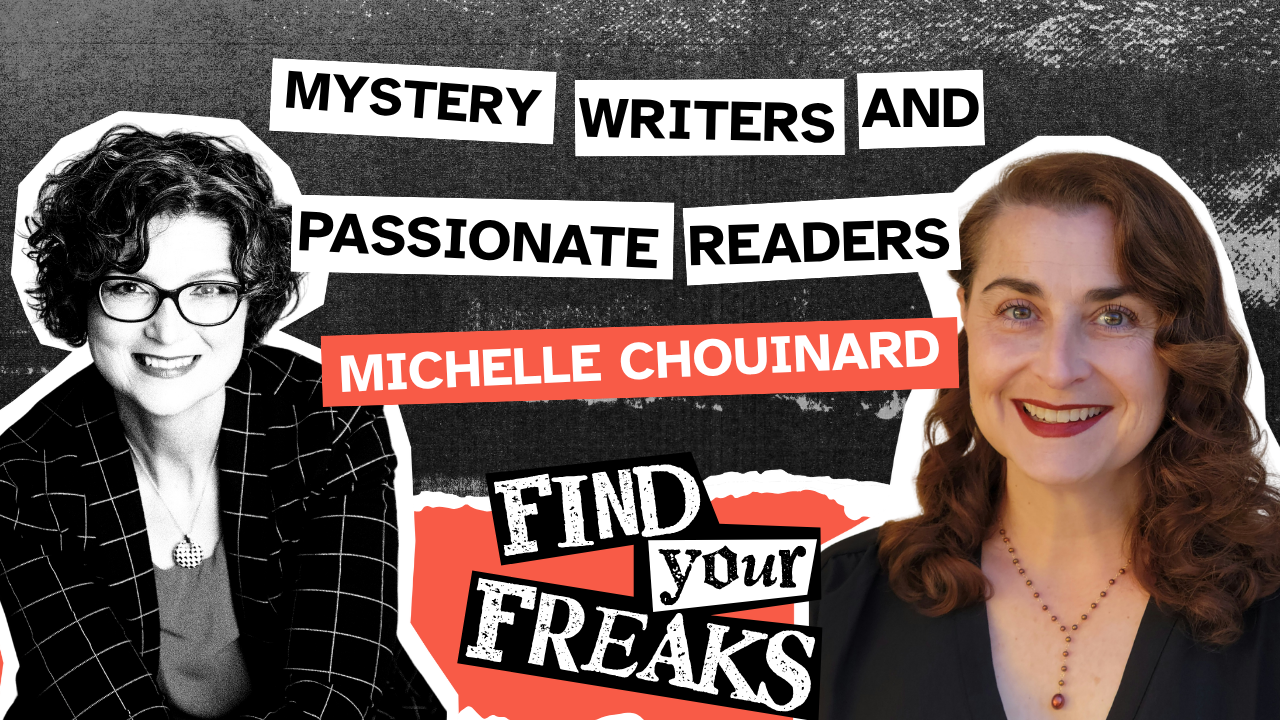
In this episode of Find Your Freaks, Tonya Kubo sits down with bestselling thriller author M.M. Chouinard to explore the surprisingly collaborative culture of the mystery writing world and what it reveals about human behavior, belonging, and community design.
Because while many creative industries are shaped by competition and scarcity, Michelle describes a world where readers don’t just want one great author. They want many. Writers support each other. Fans introduce people to new creators constantly. Success becomes additive instead of mutually exclusive.
And once you notice that dynamic, it becomes difficult not to ask a bigger question:
How much of the way people behave in community is actually shaped by the environment around them?
Episode Highlights
- [03:45] Michelle’s journey from psychology professor to bestselling thriller author
- [09:20] Why mystery readers rarely stop at just one author
- [15:10] How abundance thinking changes the culture inside creative communities
- [22:35] The emotional difference between collaborative and competitive spaces
- [29:40] Why fandom creates connection faster than traditional networking
- [36:15] The hidden pressures creators feel when success seems limited
- [42:05] What community builders misunderstand about scarcity and behavior
- [47:10] Why belonging grows faster in spaces where people openly share opportunities
When Success Feels Additive Instead of Competitive
One of the most interesting parts of this conversation is how differently people behave when success doesn’t feel finite.
Michelle talks about the mystery reader community almost like an ecosystem built on enthusiasm. Readers don’t guard their favorite authors. They recommend them. Authors celebrate each other’s launches because another successful thriller doesn’t threaten their career. If anything, it expands the appetite for the genre as a whole.
That dynamic changes everything.
Because when people stop seeing success as something they have to fight over, generosity becomes easier. Collaboration becomes easier. Even belonging becomes easier because people are no longer entering spaces bracing for comparison.
And honestly? Many community leaders underestimate how much emotional energy people spend trying to figure out whether they’re safe, valued, or quietly competing for limited attention.
“Communities change when success stops feeling mutually exclusive and starts feeling additive.” Share on X
Scarcity Shapes Behavior More Than We Admit
A lot of conversations about community behavior become moral conversations very quickly.
People are cliquey. Territorial. Competitive. Ungenerous.
But this episode pushes against the idea that these behaviors exist in a vacuum.
Because when people believe there’s only enough visibility, money, opportunity, or recognition for a handful of people, protecting yourself becomes logical. Scarcity changes how people share. It changes trust. It changes whether collaboration feels safe or risky.
That doesn’t necessarily make people bad. It makes them adaptive.
And that’s an important distinction for anyone building communities, leading memberships, or trying to create environments where people genuinely connect instead of quietly performing connection.
“Scarcity doesn’t just shape outcomes. It shapes how people relate to each other.” Share on X
Fandom Creates Connection Faster Than Networking Ever Could
Another thread running through this conversation is the role fandom plays in belonging.
There’s something uniquely powerful about discovering people who love the same strange, specific things you do. Whether it’s mystery novels, Halloween aesthetics, true crime discussions, or niche creative interests, shared enthusiasm creates connection faster than polished networking ever will.
Because fandom skips small talk.
It gives people immediate language, shared references, emotional investment, and a reason to engage beyond status or professional gain. And in many ways, that’s why communities built around genuine enthusiasm often feel more alive than spaces built purely around strategy or visibility.
People relax when they no longer feel like they’re auditioning for relevance.
“Shared enthusiasm creates belonging faster than polished networking ever will.” Share on X
What Community Builders Often Miss
If you lead communities, this episode lands a little differently.
Because it challenges the assumption that connection problems are always interpersonal problems.
Sometimes people are guarded because the environment trained them to be. Sometimes collaboration struggles because the ecosystem rewards competition. Sometimes communities feel performative because everyone inside them is trying to secure belonging instead of experiencing it.
That means culture matters more than many leaders realize.
Not just the stated values, but the emotional experience people have when they enter the room. Do opportunities get shared openly? Do people celebrate each other publicly? Does success feel expansive or limited? Do people feel like they can contribute without losing position?
People are constantly reading those signals, whether consciously or not.
And over time, those signals determine whether a community becomes collaborative, territorial, generous, or exhausting.
“People don’t just respond to community rules. They respond to the emotional ecosystem underneath them.” Share on X
At its core, this conversation is really about belonging.
Not belonging as branding. Not belonging as audience retention. Actual human belonging.
The kind that happens when people stop feeling like they have to protect every opportunity, guard every idea, or compete for every ounce of visibility.
Because when people believe there’s room for everyone, something shifts. Curiosity grows. Generosity grows. Relationships deepen. Community starts to feel less transactional and more human.
And maybe that’s the real lesson here.
The healthiest communities aren’t necessarily the ones with the most structure or the biggest audience. They’re often the ones where people feel safe enough to stop treating each other like threats.
“Belonging grows faster in spaces where people don’t feel forced to compete for worth.” Share on X
Freak Flags Fly
Each episode ends with five quick questions. Here’s how Michelle flies her flag:
- You’re my kind of freak if… you love getting lost in stories and obsessing over the details most people overlook.
- Something you love that friends don’t get: amateur genealogy, Halloween everything, and caffeine in basically every form.
- Community you’d infiltrate: any room full of passionate readers swapping book recommendations faster than anyone can write them down.
- Practice that keeps you connected: writing stories that explore the messy, complicated parts of being human.
- Someone doing freakishly good work who deserves a bigger stage: independent authors and creators building deeply loyal reader communities one connection at a time.
Meet Our Guest
M.M. Chouinard is an Edgar Award–nominated bestselling author known for weaving psychology, suspense, and human complexity into gripping thrillers. She is the author of The Serial-Killer Guide to San Francisco series, the Detective Jo Fournier thriller series, and the standalone psychological thriller The Vacation. Before becoming a full-time author, Michelle earned a Ph.D. in developmental psychology from Stanford University and served as a founding faculty member at University of California, Merced. When she’s not writing dark and twisty stories, she enjoys caffeine in all forms, amateur genealogy, crafting, baking, and anything related to Halloween.
Meet Your Host
Tonya Kubo is a community strategist, writer, and rebel with a cause: helping people find the place where they truly belong. She’s spent nearly two decades building online spaces that feel more like chosen family than comment sections, and she’s not afraid to call out the fluff in favor of real connection. As the founder of Find Your Freaks, Tonya brings together unconventional thinkers, builders, and bridge-makers who believe that “normal” was never the point. When she’s not hosting the show, she’s raising two daughters, leading client communities, and making meaning out of the mess.
Episode Transcript
Get the full transcript from Episode 24.
Resources & Mentions
- M.M. Chouinard Official Website
- The Serial-Killer Guide to San Francisco Series
- Detective Jo Fournier Series
- The Vacation
- Edgar Awards
Support the Show
If Find Your Freaks matters to you, help keep it ad-free by buying us a coffee. Every dollar helps more weirdos find their people.
Merch available through Abilities and Attitudes.
Let’s Stay Freaky
What’s Next
In the next episode, Tonya explores why some communities naturally foster collaboration while others create competition and territorial behavior. Drawing from this conversation with Michelle, she unpacks how scarcity shapes the way people connect, share opportunities, and decide whether it feels safe to truly belong.


0 Comments